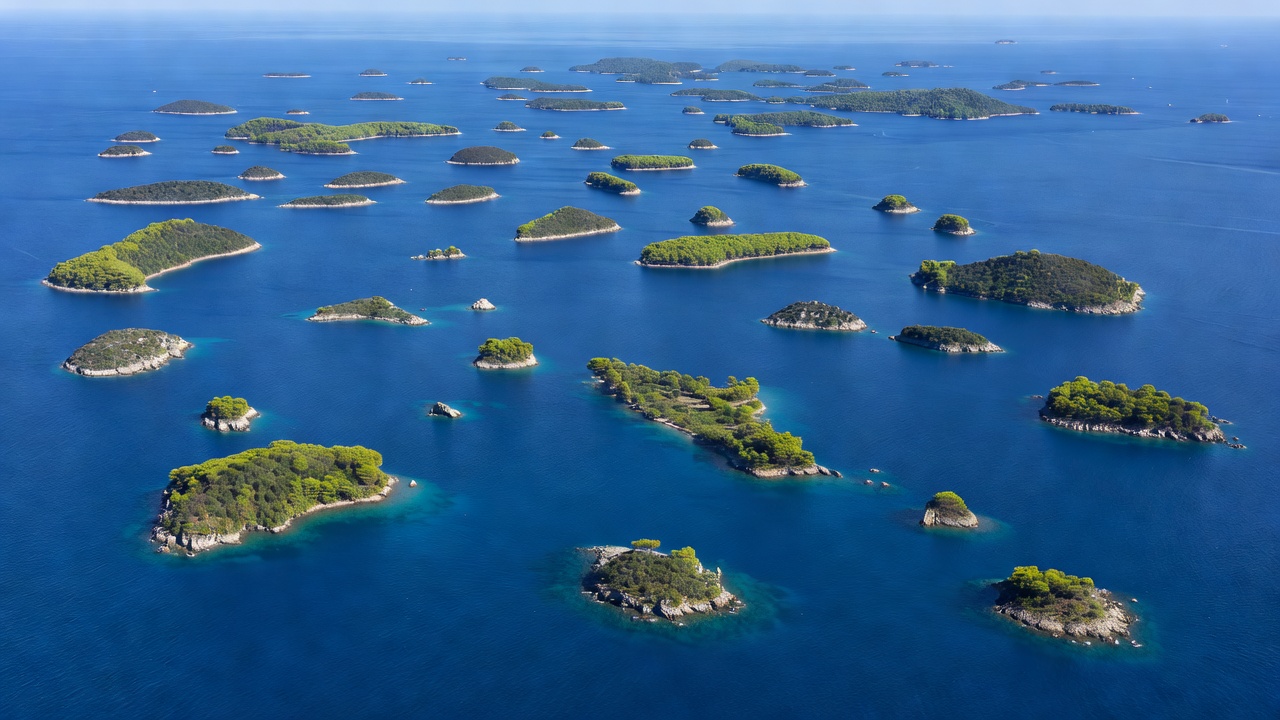
Lying directly across the channel from the bustling port of Hvar Town, the Pakleni Islands (often mistranslated as "Hell's Islands" but actually deriving their name from "paklina," a type of pine resin historically used to waterproof ships) offer an intricate labyrinth of secluded coves, vibrant seabed ecosystems, and exceptional holding grounds. While the main town of Hvar attracts significant commercial maritime traffic and megayachts looking for nightlife, the archipelago itself remains a sophisticated retreat for independent yachtsmen seeking natural shelter.
Nautical Topography and Approach
The archipelago stretches east to west, acting as a natural breakwater against the prevailing southerly winds for the island of Hvar. Navigation through the Pakleni chain requires acute attention to depth sounders and up-to-date cartography. The passages between the islets can be narrow and feature unlit rocks just below the surface. The channel separating Sveti Klement (the largest island in the chain) from the surrounding smaller islets is generally deep enough for vessels with a draft up to 3.5 meters, provided captains adhere strictly to the central fairway.
When approaching from the north during a Bora (a strong, cold, northeasterly wind), the southern indentations of Sveti Klement provide excellent natural harbors. Conversely, when the Jugo (a warm, humid southeasterly wind) blows, the northern anchorages become vital refuges.
Primary Anchorages
Uvala Vinogradišće: Often considered the jewel of the archipelago, this wide, sandy-bottomed bay on the southern side of Sveti Klement offers a stunning turquoise hue and excellent holding. The bay is densely surrounded by fragrant pine forests. However, its popularity means arriving early is essential during the July and August peak seasons. Authorities have installed mooring fields here, requiring payment, which somewhat restricts free anchoring but adds security during unsettled weather.
Soline Bay: Located further east along Sveti Klement, Soline provides a quieter alternative. The holding here is a mix of sand, mud, and some weed. It offers excellent protection from north and westerly winds. Care should be taken to ensure the anchor is well set through the weed patches.
Onshore Infrastructure
ACI Marina Palmižana, situated on the northern side of Sveti Klement, is a critical logistical node. Operating seasonally, it offers approximately 200 berths with water and electricity, along with basic provisioning and waste disposal. Access to the marina is straightforward, though the entrance can experience crosscurrents. The marina is connected to the southern bays via a short, scenic walking path through an exotic botanical garden established by a local family over a century ago.
Dining within the archipelago is sophisticated, focused heavily on daily catches, local olive oil, and high-quality Dalmatian wines. Several establishments nestled in the coves offer tender services, picking up guests directly from their anchored yachts.
Environmental Considerations
The waters surrounding the Pakleni Islands are rich in Posidonia oceanica (Mediterranean tapeweed). This seagrass is a vital carbon sink and nursery for marine life, but it is highly vulnerable to anchor damage. Yachts are legally and morally obliged to drop anchors only in clear sandy patches. In areas where mooring buoys are provided, their use is mandatory to preserve the benthic environment.
Pros and Cons
Advantages: The sheer number of deep indentations means shelter can be found in almost any weather condition. The proximity to Hvar allows for easy crew changes and high-end provisioning, while the islands themselves maintain a disconnected, natural atmosphere.
Disadvantages: In the height of summer, the density of day-tripper boats and water taxis passing through the main channels can create an uncomfortable chop and detract from the isolation. Additionally, provisioning options on the islands themselves are minimal, necessitating trips to the mainland for anything beyond basic supplies.